
You and Your Brain 4: Three Parts of Your Brain
Dear Friend,
Your brain’s most powerful catalyst for growth and change is its ability to interrupt old survival programming. This is called neuroplasticity, and it’s how your brain adapts and changes throughout life.
But what is old survival programming?
It’s the most primal part of our brain, responsible for immediate reactions to threats and instincts, such as the fight-or-flight response. However, it’s essential to balance this with higher cognitive functions.
It’s fascinating how our brain’s evolutionary history is reflected in its structure and functions.
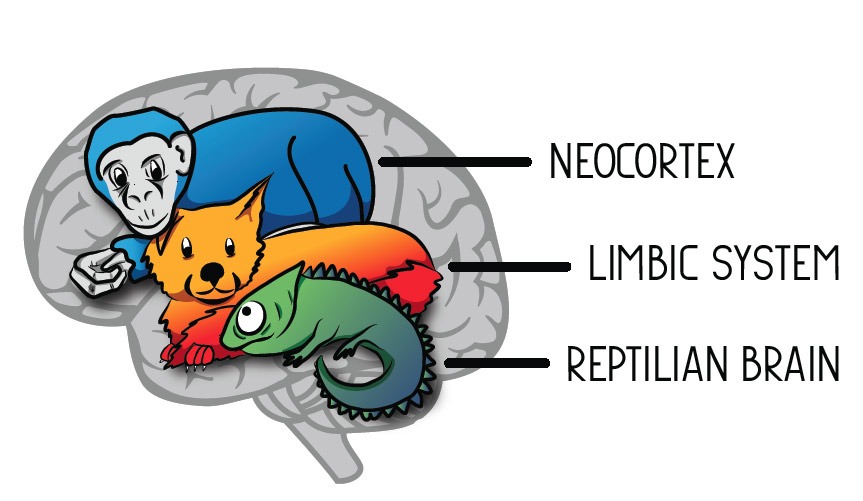
- The brainstem, often associated with reptilian ancestors, focuses on survival.
- The limbic system, often called the “emotional brain,” evolved in mammals like foxes. It plays a key role in processing emotions, forming memories, and regulating behaviors such as feeding and reproduction. This system adds complexity to our responses, allowing for more nuanced reactions to stimuli.
- The neocortex, which evolved most prominently in primates like monkeys, is responsible for higher cognitive functions such as reasoning, language, and conscious thought. This part of the brain enables us to plan, problem-solve, and engage in abstract thinking, setting us apart from other animals.
Through practices like mindfulness, meditation, and other forms of mental training, we can indeed rewire our brains to respond more adaptively to the world around us.
The visual below is a good reminder that sometimes the most primal part of our brain, our “lizard brain”, is calling the shots and it’s up to us to change our mindset.

Mindfulness Activity of the Week
Getting Curious About Conflict
Human beings thrive on connection and healthy intimate relationships. However, our reptilian brain’s primitive programming can keep us stuck in the fight-or-flight response and push people away.
How we resolve conflict impacts the relationships we have with ourselves and others.
- Do you—or does someone in your life—create conflict for stimulation and attention? What does this look like?
- Do you—or does someone in your life—avoid conflict by being a people-pleaser? This looks like saying ”yes” to things you don’t want to do because saying “no” feels uncomfortable or challenging.
- Do you—or does someone in your life—retreat from or avoid conflict no matter how big or small the issue?

Movement Activity of the Week
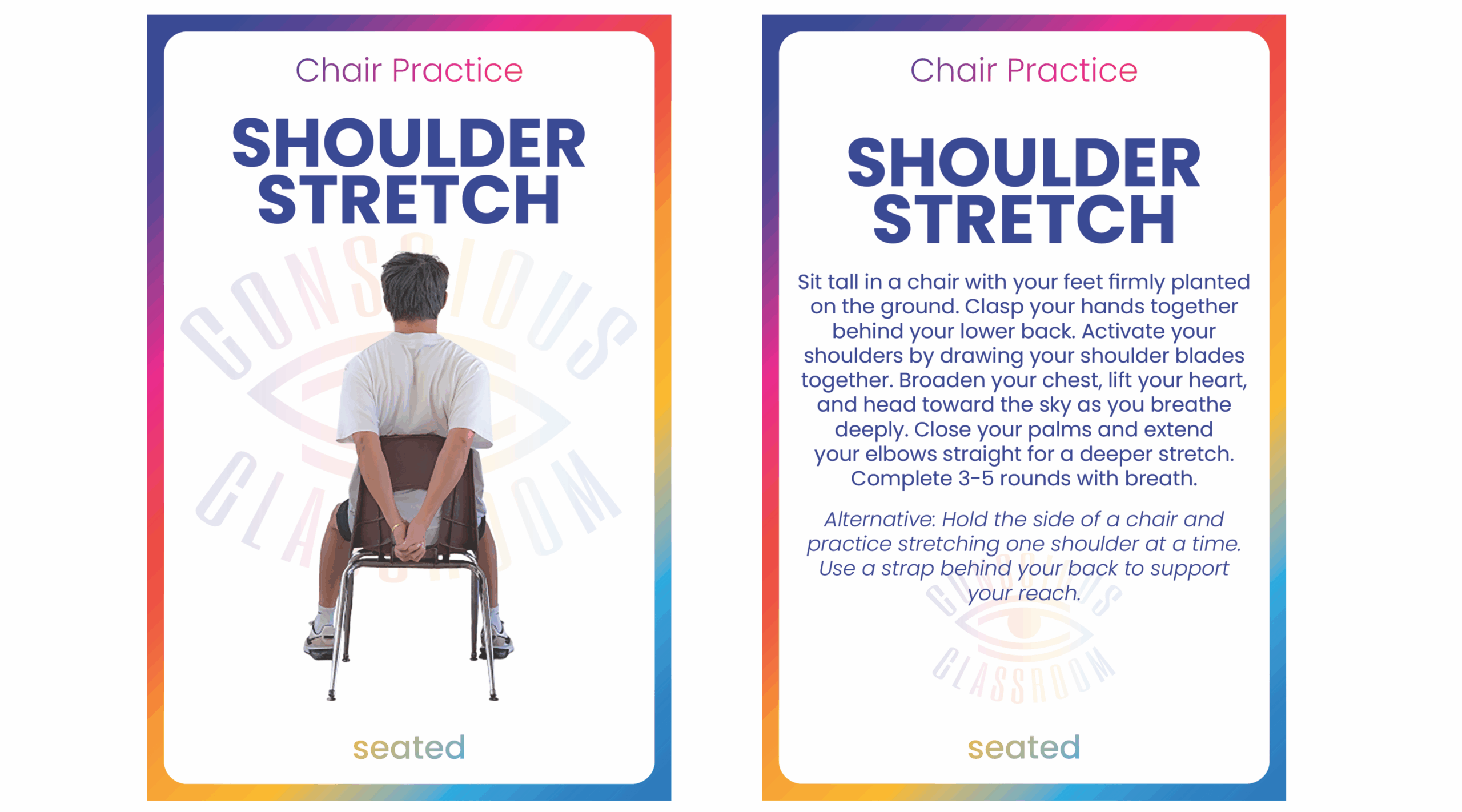
Shoulder Stretch – Chair Practice
Practice aligning your mind and your body.