
Breathwork for Initiating Calm
Dear Friend,

Awake
Breath is one of the fastest and most accessible ways to shift a student’s internal state. Learning and memory don’t take root in a stressed, rushed, or dysregulated brain. When students pause to notice their breathing—even for a moment—they awaken to how their body feels and how ready (or not) they are to learn.
Aware
When students feel anxious, overwhelmed, or distracted, the amygdala—the brain’s threat detector—gets loud. This pulls the brain toward survival mode and away from learning.
Slow, steady breathing signals the parasympathetic nervous system to turn on, calming the amygdala so new information can actually “stick.”
With slow, deep breaths, oxygen and blood flow increase to key learning centers:
- Prefrontal cortex — focus, planning, problem-solving
- Hippocampus — memory formation and recall
- Cingulate gyrus — operates as the brain’s gear shifter, enabling the brain to shift attention, regulate emotions, and move smoothly between tasks and thoughts
This is the neurological foundation of the “learning zone.”

Align
Slow, rhythmic breathing helps students shift into alpha and low-beta brainwave states—the ready, steady, focused modes essential for:
- concentration
- information intake
- pattern recognition
- emotional stability
- working memory
When students’ internal state aligns with learning requirements, their capacity to engage with and retain new content increases significantly.

Activate
These simple breathwork exercises support regulation, focus, and memory from morning meeting to closing circle:
- TV Breath — check in and notice how you’re feeling
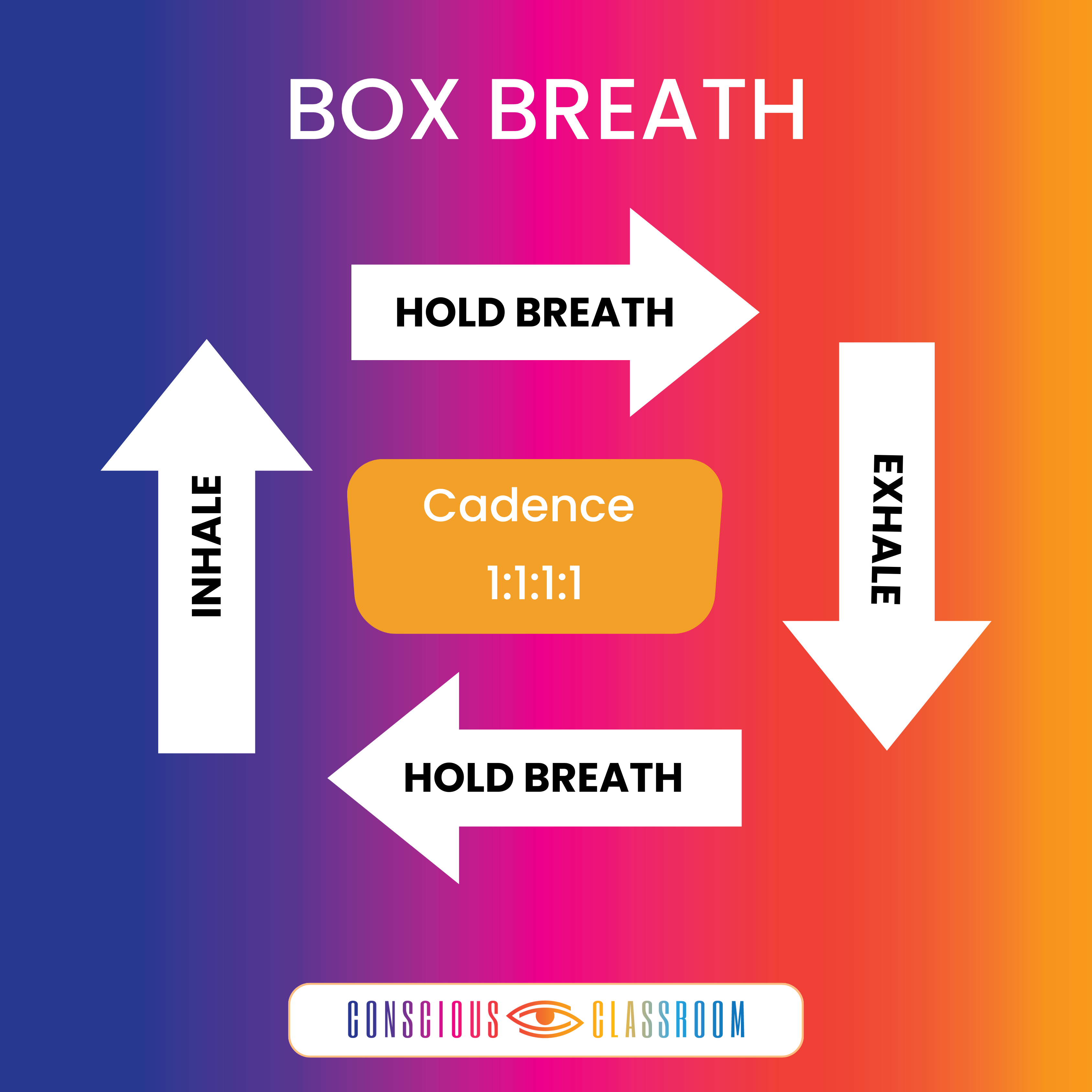
- Box Breath — create rhythm, calm, and steady regulation
- Ocean Breath — energize and invigorate
- Buzzing Bee Breath — narrow focus and quiet internal noise
- Alternate Nostril Breath — support balance, attention, and memory
More oxygen. Clearer thinking. Stronger memory encoding.
With each breath, we give students a steadier foundation to thrive!


Breathwork Activity of the Week
Box Breath