
Breathwork 7: Ally
Dear Friend,
It’s one thing to say you’re against the unjust treatment of others, but it’s a whole different thing to say, “I stand with a group of people as a helper.”
When students understand what it means to be an ally, they can provide assistance and support to ongoing efforts like anti-racism. They gain proficiency in the CASEL-5 standard of social awareness by:
- learning to examine their prejudices and biases
- learning to recognize situational demands and opportunities
- learning to understand the influences of organizations and systems on behavior
How can breathwork help us to be better allies?
Breathwork is helpful for self-control in the moment. It empowers us and affirms that we can regulate ourselves in social environments. It gives us the energy to speak up. Answer the following questions with a partner or your class:
- How does it feel when you or others are bullied?
- Where do you feel it?

Breathwork Activity of the Week
Bellows Breath
- Place your hands with palms face-down on your lap.
- Anchor your lower body.
- The breath moves in and out of the body rapidly with the pumping action of the belly in and out.
- Like stoking a fire by squeezing the airbag on a bellows, the breath is stoked with oxygen; quick in and quick out.
- Breathe equally with quick inhales and quick exhales.
- The breath stays low in the belly so that the belly muscles help pump the breath in and out of the body.
- This generates a lot of heat in the body.
- Build the intensity of each inhale and exhale as the practice becomes more familiar
- Complete a minimum of 10 breaths
Benefits of Bellows Breath:
- Helps to let go and shift unhelpful thoughts and patterns
- Improves blood circulation
- Brings balance to our nervous system
- Strengthens our immunity
- Builds lung endurance and vibrancy

Movement Activity of the Week
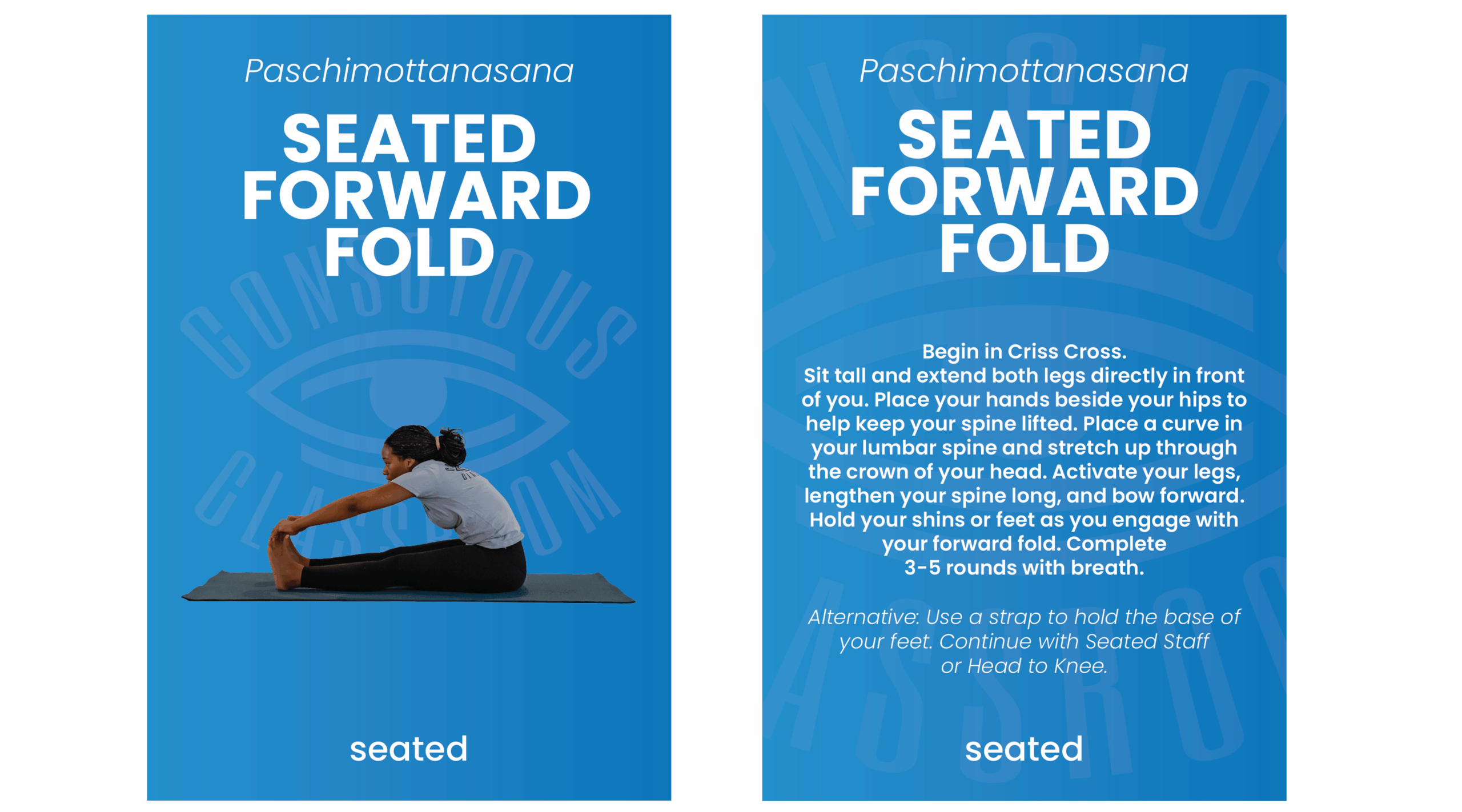
Seated Forward Fold
This pose fosters a quiet mind, which helps us show up authentically in uncomfortable social interactions. It helps us “read the room” and learn to recognize situational demands and opportunities.