
4A’s as a Teaching Tool – ALIGN
Dear Friend,
Over the past few weeks, we’ve explored Awake and Aware, two foundational steps of the 4A’s Philosophy of Learning. Together, they awaken the body and expand awareness—setting the stage for our third “A”: Align.

Align
Why Align Matters
Alignment begins with the connection between mind and body. These systems are in constant conversation—through breath, hormones, and the nervous system—helping us feel grounded and whole. The Vagus Nerve plays a key role in this process, regulating our state of mind so we can respond with calm and clarity.
When our thoughts are clear and positive, our behavior follows. But when we’re misaligned, the body slips into protection mode—fight, flight, or freeze—allowing life to happen to us instead of through us.
Through mindful alignment, we help students reconnect to the present moment. Pausing, breathing, and realigning shifts us from reaction to response and from chaos to calm.
Alignment allows us to:
- Create harmony between body, mind, and attention
- Model emotional regulation and focus for students
- Build resilience and presence in the classroom
- Respond with clarity, calm, and compassion.
Try This in Your Classroom
Try these alignment-focused practices to help your class—and yourself—find balance throughout the day.
Heart & Belly Breath
Invite students to place one hand on their heart and one on their belly. Take a deep breath in through the nose, feeling both hands rise. Exhale slowly, feeling the body settle. Repeat for three rounds to align mind and body in the present moment.
Positive Mantra
Encourage students to choose a short, uplifting phrase—like “I am calm and capable” or “I can meet this moment.” Repeating positive affirmations strengthens neural pathways, reinforcing focus, confidence, and self-belief.
Reflective Journaling
Ask students to pause and write about a thought or feeling that’s been present. Then reflect: Is it true? Is it helpful? This practice helps reframe limiting beliefs through awareness and curiosity.
Mindful Moments
Short moments of sensory reset, brain breaks, and mindful movement can bring students into the present moment, help regulate the nervous system, restore focus, and support inclusive participation for all learners.

Next week, we’ll explore the final “A”: Activate — how to channel clarity, awareness, and alignment into creativity, energy, and purposeful action.

Movement Activity of the Week
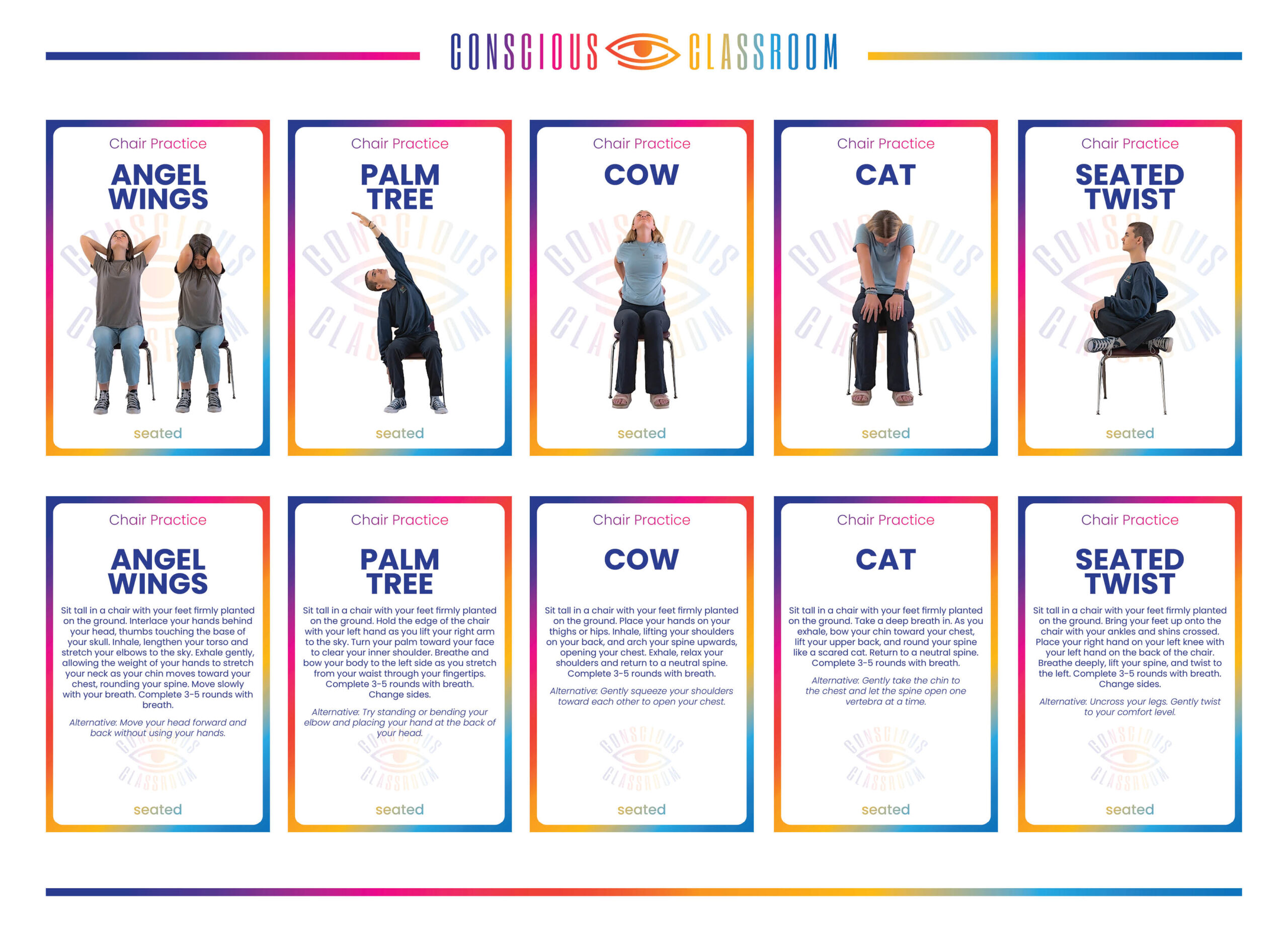
Chair Practices
At Conscious Classroom, we believe mindful movement is for EVERY mind and EVERY body. We’ve added Chair Practices to each lesson plan to support diversity, inclusion, and accessibility—ensuring every student has an opportunity to move, breathe, and connect.