
Breathwork for Self-Management
The Collaborative for Social and Emotional Learning (CASEL) defines Self-Management as the ability to effectively manage one’s emotions, thoughts, and behaviors in different situations. This includes the capacity to delay gratification, manage stress, and feel motivation and agency to accomplish personal and collective goals.
Breathwork aids in self-management by directly influencing the nervous system through controlled breathing. When students can consciously manage their breath, they can better regulate their emotions, allowing them to respond to situations with more awareness and composure.
Incorporating breathwork into students’ daily lives is a small shift that can yield monumental benefits, helping them thrive in their academic and personal aspirations. Let’s explore how!

Mindfulness Activity of the Week
Establish a Daily Practice
Getting started with breathwork is simple. Here are a few ways educators can support their students with integrating practice into their daily routines:
- Morning Ritual: Begin each day or homeroom period with a few minutes of deep breathing to set a calm and focused tone for the day ahead. Give Belly Breath a try!
- Study Breaks: Incorporate short breathwork sessions during study breaks to relieve stress and recharge. Box Breath works well here!
- Mindful Moments: Throughout the day, invite students to take a few moments to check in with their breath and allow their breath to ground them in the present moment or stimulate endurance as needed. Skull-Shining Breath is a great way to rejuvenate!
- Bedtime Routine: Encourage students to establish a calming breathwork practice before bed to prepare their minds and bodies for rest. Try Sleepy Time Breath!

Breathwork Activity of the Week
Let’s Practice
Also known as Breath of Fire, Skull-Shining Breath is a great way to rejuvenate your energy and regulate your nervous system.
- Sit comfortably at your desk, with your feet on the floor and your arms resting on your thighs.
- Inhale deeply through both nostrils, expanding your chest.
- Forcefully exhale through your nose while allowing your abdominal muscles to contract without straining your muscles, then gently inhale naturally.
- Complete 3 rounds with 21 exhales in each round.
Sleepy Time Breath
Enjoy this practice lying down. It is a perfect breath exercise for getting really quiet, taking a power rest, or settling yourself before you sleep.
- Inhale for the count of 4, pause for the count of 7, and slowly exhale to the count of 8.
- Repeat the practice as many times as needed to help prepare the mind and body for rest.

Movement Activity of the Week
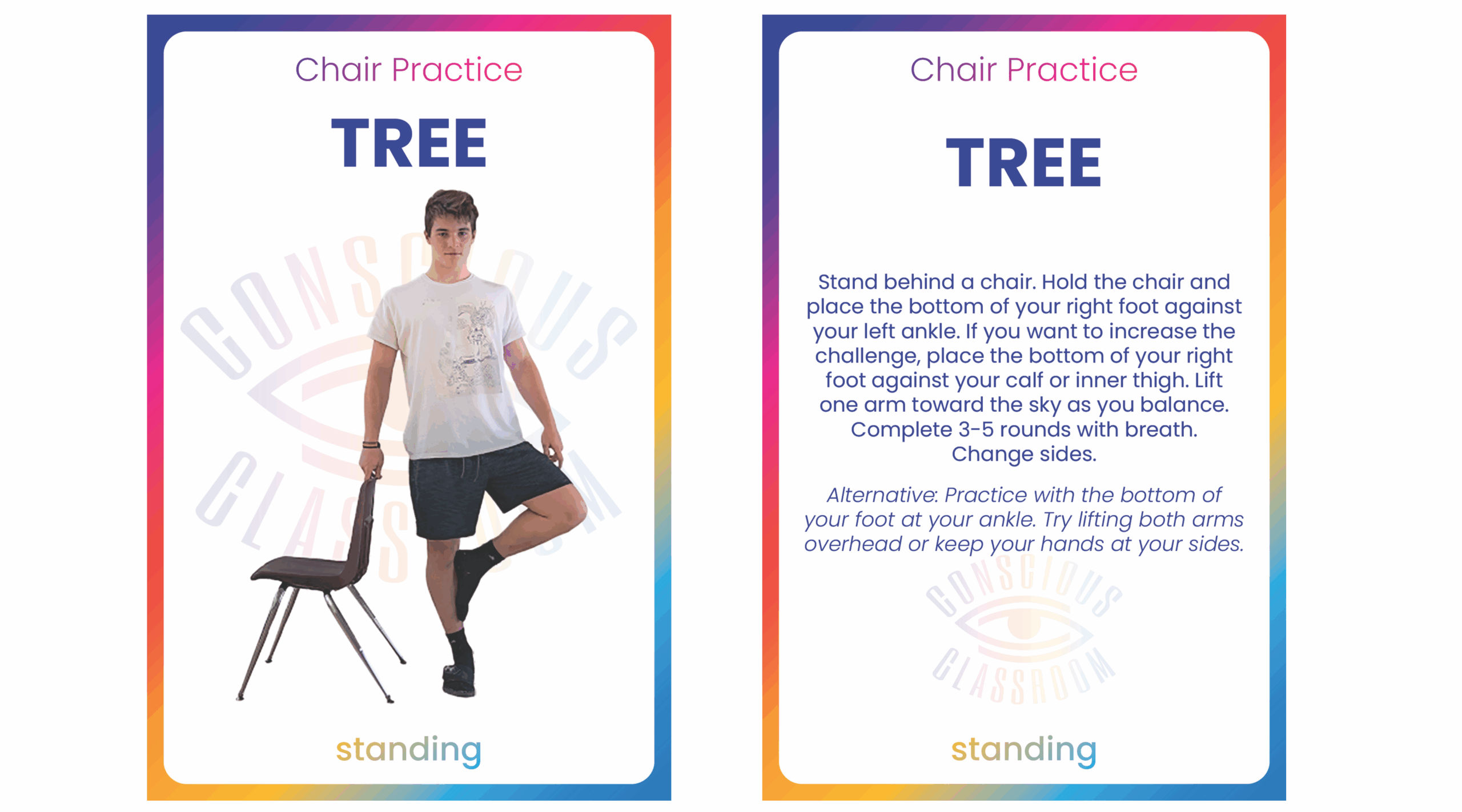
Cultivate Mindfulness and Self-Management with Tree
The calm that accompanies balancing poses encourages mindfulness. Tree invites students to connect with their breath and body, enhancing their awareness of the present moment. When grounded in the present moment, they are more apt to recognize their emotions (self-awareness), manage their emotions (self-management), and demonstrate personal agency.