
You and Your Brain 3: Neuroplasticity and Having a Growth Mindset
Dear Friend,
Confusion is your superpower! It’s the signal that everything is about to “click.” It’s the moment right before your brain cells create new pathways that make sense, which is called neuroplasticity.
A neuroscientist from the 1940s named Donald O. Hebb described the phenomenon that when a neuron is fired, it attracts even more neurons to fire and cluster around it.
Hebb’s Law states, When Neurons Fire Together, They Wire Together.
When you are learning something new, these clusters of strongly bonded neurons help you process the new information and create new neural pathways.
Neural pathways make learning easier and more effective.
The next time you feel frustrated or confused when trying to learn something new, take a minute to stretch or breathe and then return to the task. Experiment with how long it takes for your confusion to pass. If it passes quickly, congratulations! If it’s taking longer than you’d like, ask for help.
Having a growth mindset gives students and teachers agency over their education. Understanding how neuroplasticity works inside your brain gives you great information about how you learn and when you might want to ask for help.

Mindfulness Activity of the Week
Having a Growth Mindset & Neuroplasticty
Discover how neuroplasticity makes learning easier with these essential questions:
- How would you describe someone who is closed-minded?
- How does being closed-minded impact your outlook on life, your relationships with family and friends, and your relationship with yourself?
- In what areas of your life are you closed-minded?
- What does it feel like when you’re stuck in a certain mindset?
- Does a fixed mindset allow for creativity and innovation? Why not?

Movement Activity of the Week
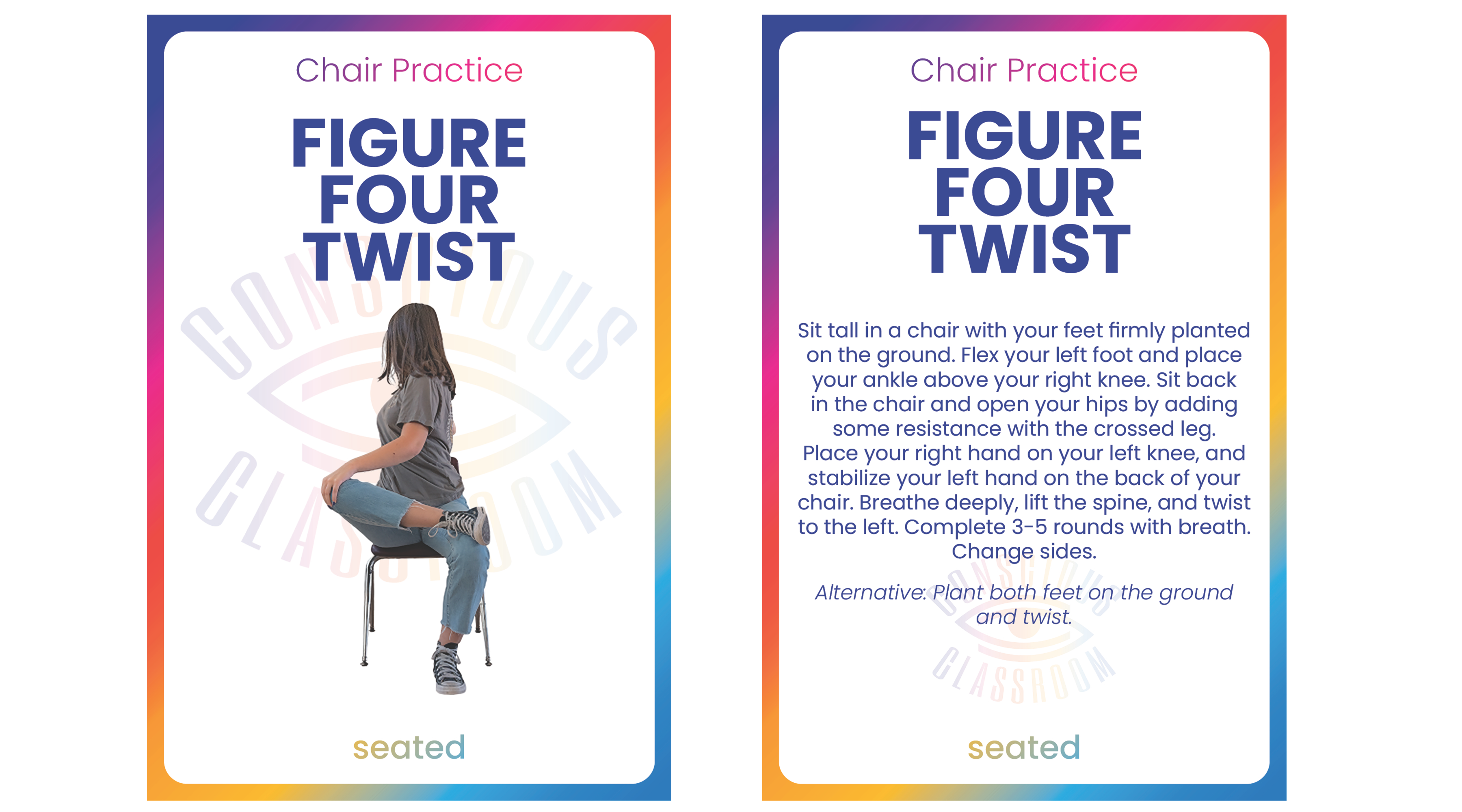
Figure Four Twist – Chair Practice
Practice aligning your mind and your body by changing your perspective.