
Breathwork 2: Anatomy
Belly Breath is a basic breathwork practice that can help you and your students decrease anxiety and increase concentration before a test.
But before we get to that, let’s learn more about the anatomy of belly breath and how it works.
When we inhale, the diaphragm (the large, thin, dome-shaped muscle that sits at the base of the chest) moves downward and the intercostal muscles (the muscles between the ribs) expand so the lungs have room for more air.
When we exhale, the diaphragm lifts back up and the intercostal muscles contract as we expel all of the air out of our bodies and move carbon dioxide out of the body.
Practicing breathwork helps:
- Strengthen your diaphragm
- Increase your capacity to move more oxygen throughout your entire body
- Oxygenate your blood and your brain
Use our plug-and-play lesson plans to help your students manage their cognitive energy and regulate their nervous systems.

Breathwork Activity of the Week
Belly Breath
- Place your hand on your belly.
- Inhale and notice how your diaphragm moves down and your belly presses into your hand.
- As you exhale, release the air and pull your belly button toward your spine.
- Repeat 3 times.

Movement Activity of the Week
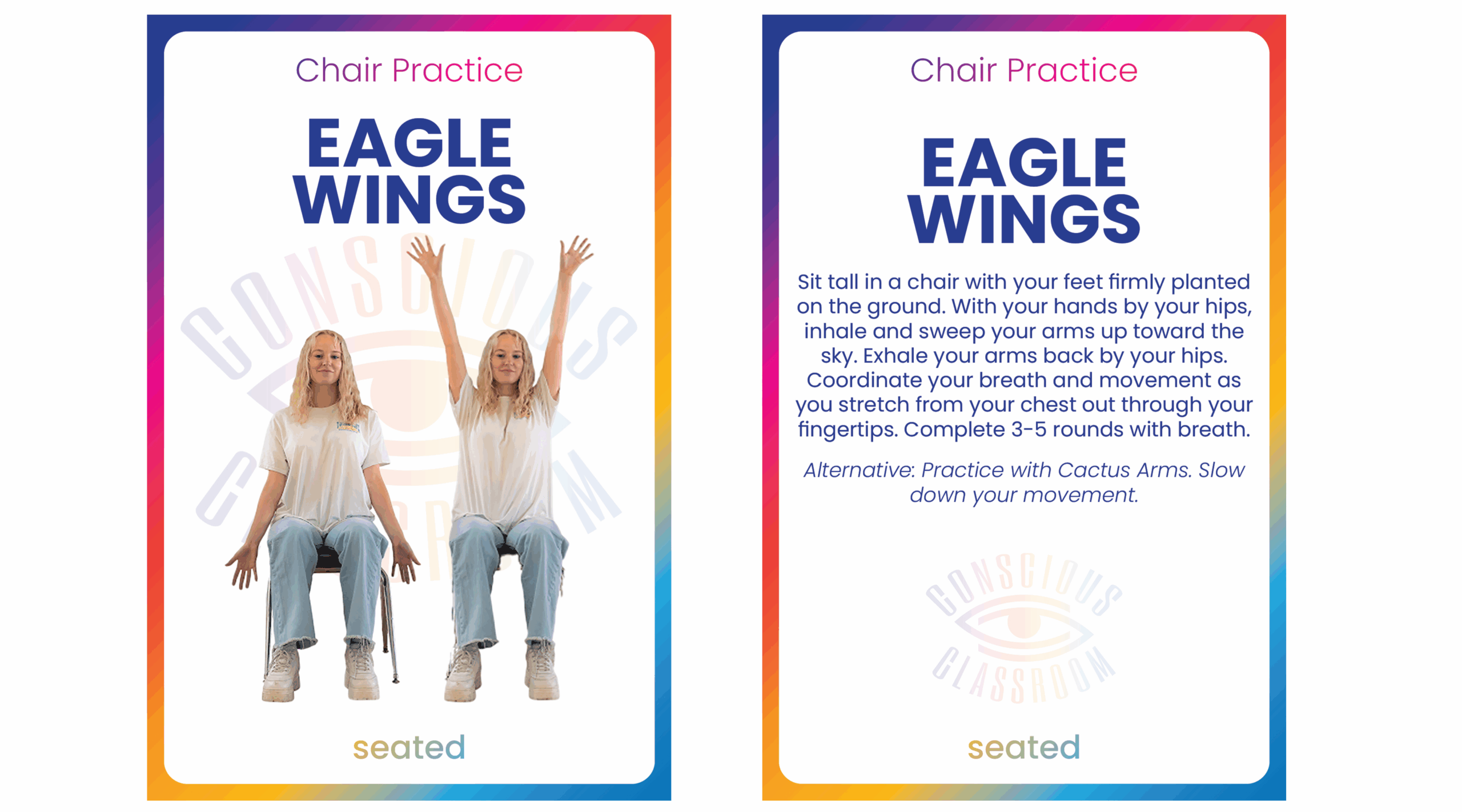
Eagle Wings
Practice aligning your mind and your body.