
Breathwork 1: Benefits
Dear Friend,
Helping your students increase their “readiness to learn” is our intention for 2024.
Many students are trying to cope with challenges that impact their ability to concentrate.
Transform your classroom into an educational environment where students receive easy-to-use tools for emotion regulation and agency over their education.
One of those tools is breathwork. For January and February, we’ll provide breathing practices that help decrease anxiety and stress.
Feel free to use these exercises in your classroom to teach students how to manage their cognitive energy and regulate their nervous systems.

Breathwork Activity of the Week
Ocean Breath
Ocean Breath is the foundational building block of breath. Encourage students to breathe in a way that feels comfortable. With regular practice, breathwork can strengthen your lungs, build endurance, and increase vitality.
- Inhale through your nostrils and notice how your breath moves across the back of your throat—create a sound similar to the ocean (or Darth Vader’s breathing.)
- Exhale through the nose like you’re fogging up a mirror. Slowly, try to control your exhale.
- Complete three rounds of nose breathing.
- Notice if you can control rapid, shallow, and fear-based breathing by slowly extending your exhale through nose breathing.
- Try using a count as you inhale. Mirror your exhale with the same count.
The sounds can be mesmerizing and rhythmic. They offer us an opportunity to become tuned into our own breath, allowing us to move in rhythm with other areas of our lives.

Movement Activity of the Week
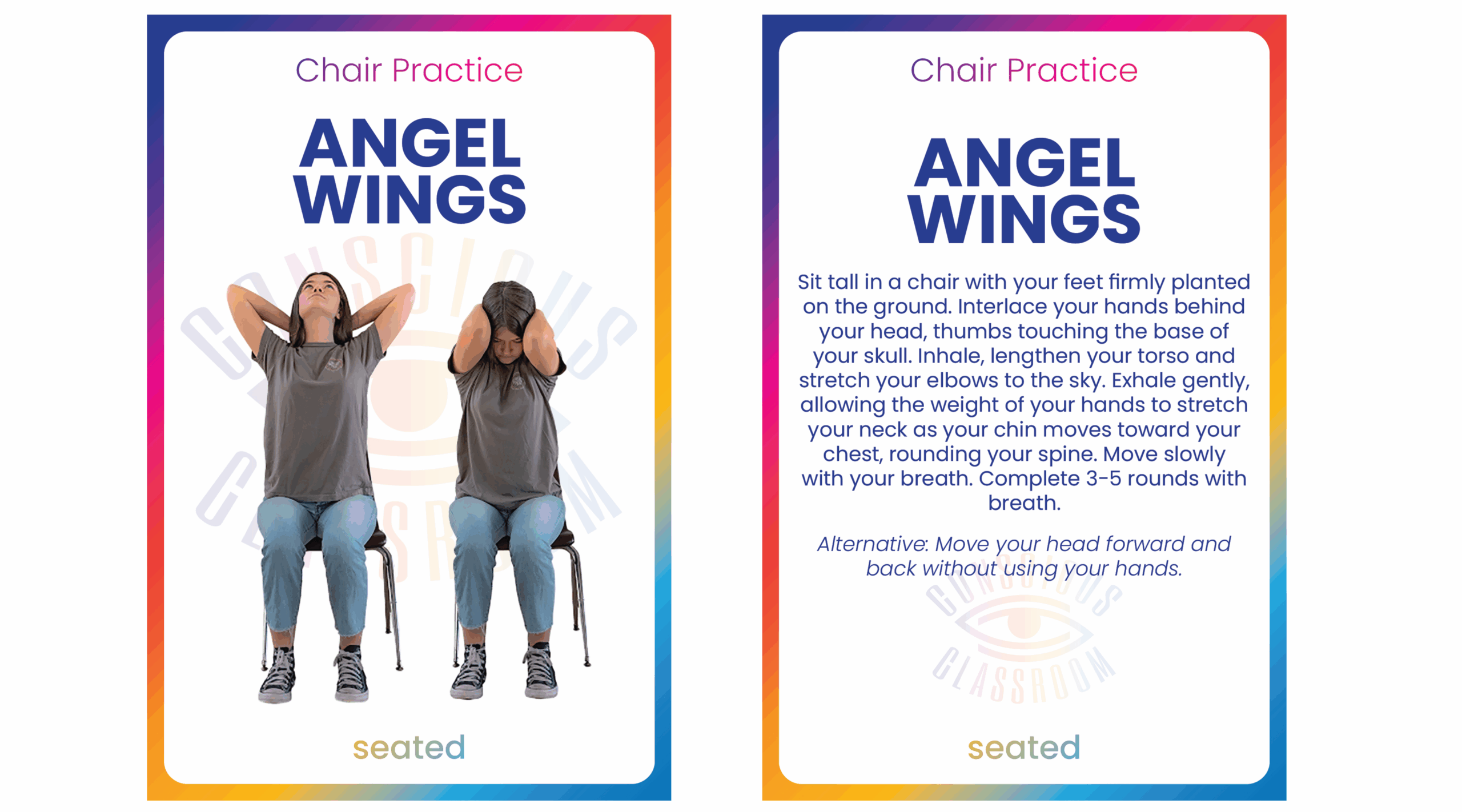
Angel Wings
Practice aligning your mind and your body.