
Brain Science, Self-Regulation and You Week 1: Intro to Brain Science

Awake
This month, we are exploring Brain Science, Self-Regulation, and You, and this week, we begin with a simple introduction to how the brain works and why it matters for learning and well-being.
Brain science, for beginners, invites us to explore how the brain shapes our thoughts, emotions, movements, learning, memory, and relationships. Every moment, the brain and body are in constant communication—sending and receiving signals that influence how we feel, focus, and respond to the world around us.
Understanding even a few key parts of the brain can help us better understand ourselves. Regions like the prefrontal cortex, amygdala, hippocampus, and cerebellum work together to support thinking, emotions, memory, and coordinated action. Inside the brain, billions of neurons send electrical and chemical signals that shape our experiences and behaviors throughout the day.
When we begin to learn about the brain, we awaken a powerful insight: our thoughts, feelings, and actions are connected—and they can change.

Aware
One of the most powerful abilities we have is metacognition—the ability to notice and reflect on our thoughts.
The prefrontal cortex helps us pause, think, and make thoughtful choices. Meanwhile, the amygdala helps our nervous system detect safety, stress, and connection. Our brain is constantly predicting what might happen next based on past experiences.
When we feel safe, supported, and connected, the brain is more open to learning, curiosity, and growth. This is an important part of self-regulation—the ability to notice what we are feeling and gently guide ourselves back toward balance.
As we become aware of our thoughts and feelings, we strengthen the brain’s pathways for resilience and well-being.

Align
The brain works best when its different regions are working together.
The hippocampus helps us form and organize memories—what happened, where it happened, and when. The cerebellum supports coordination, rhythm, and timing. When these areas synchronize with the prefrontal cortex and the amygdala, we are better able to focus, understand emotions, and respond thoughtfully.
This coordination is supported by neuroplasticity—the brain’s ability to adapt and rewire through experience. Where we place our attention matters. Over time, repeated thoughts, emotions, and actions strengthen certain neural pathways. In other words, what we practice grows stronger!

Activate
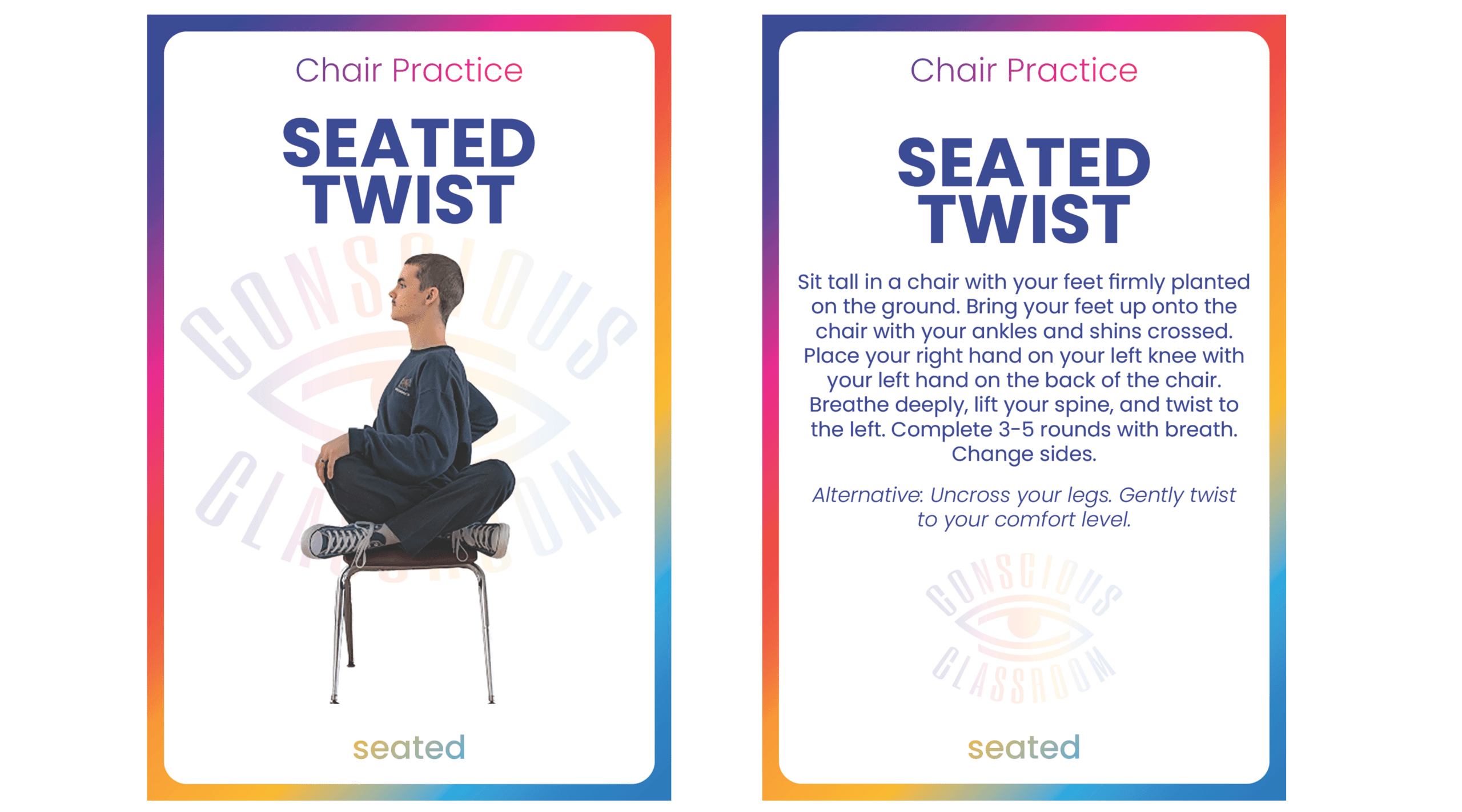
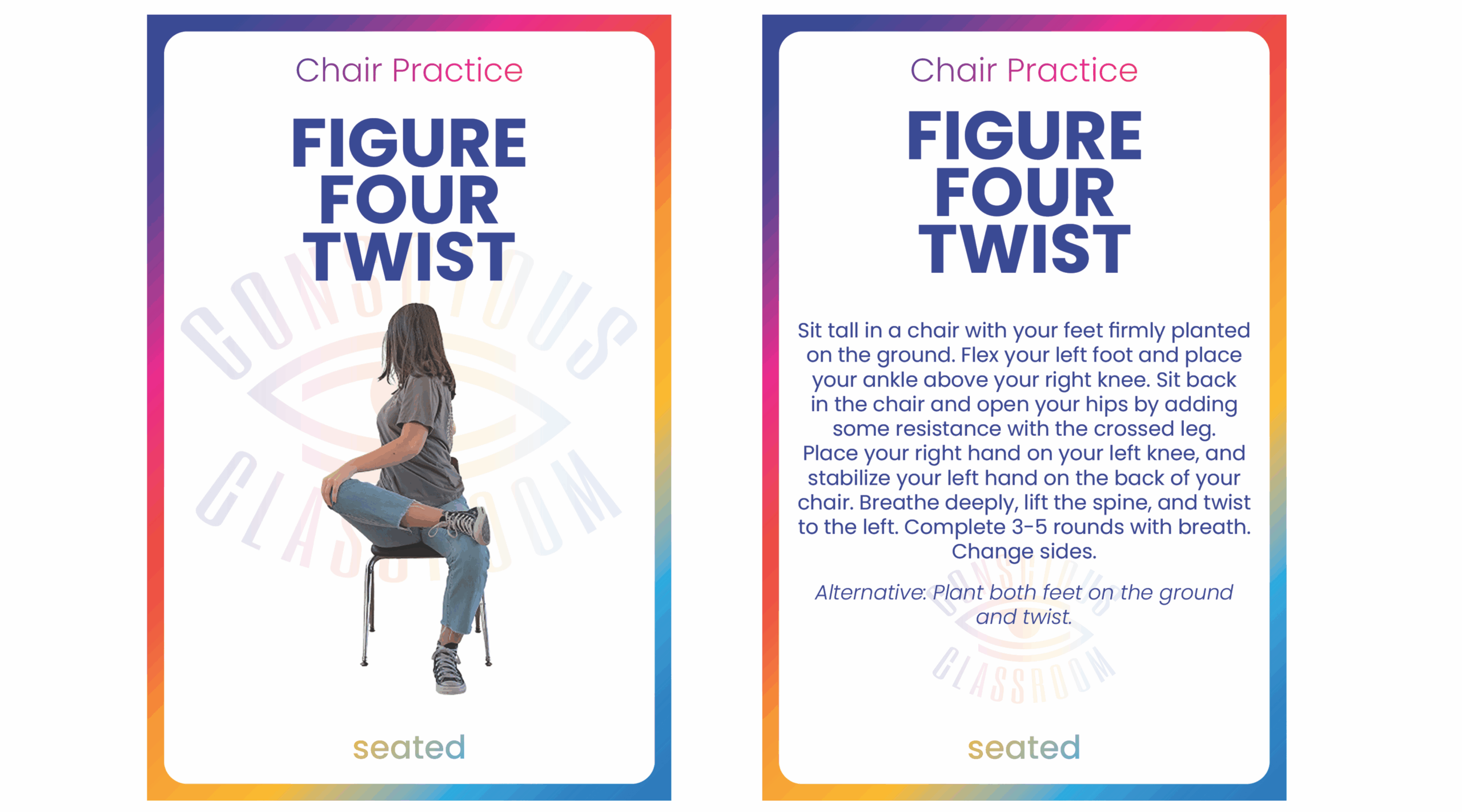
Movement helps integrate the brain and body, increasing focus, regulation, and readiness to learn. Twisting is a simple way to support this connection.
Imagine an invisible line running from the top of your head down the center of your body—this is your midline. When you move across that line, you cross the midline, an important developmental skill that begins in infancy.
Crossing the midline supports eye–hand coordination and helps both sides of the brain communicate through the corpus callosum. When the hemispheres work together, more neurons fire and new connections form, supporting attention, coordination, and learning.
In these twisting chair practices, you gently rotate across the midline, helping both sides of the brain communicate and strengthening neural connections. Give them a try and see how they help you refocus and reset.

Activate Practice of the Week
Mindful Movement